
New Year, New Targets: What a Realistic Return Actually Looks Like
The start of a new year has a way of resetting expectations.
New goals!
New plans!
New return targets?
And almost every year, those targets quietly drift into fantasy territory.
This isn’t about aiming low. It’s about aiming realistically — and building a portfolio that gives you a genuine chance of sticking with the plan when markets inevitably misbehave.
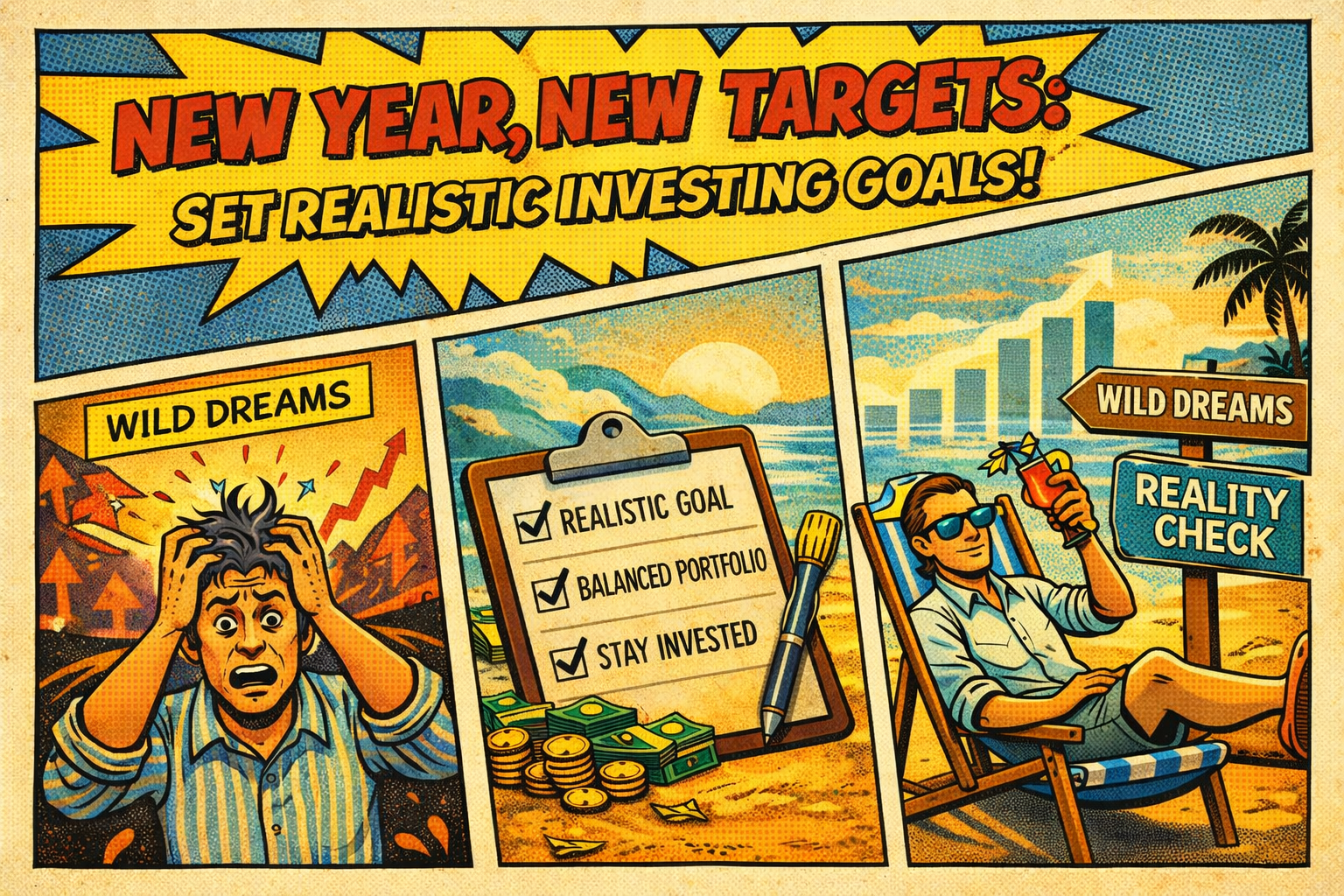
Why New Year Return Targets So Often Miss the Mark
At the beginning of the year, optimism is cheap. Markets feel calm. Last year’s winners are fresh in memory. Social feeds are full of charts that only go up.
So people set targets like:
“I’ll aim for 12–15% this year”
“I just need to beat the market”
“This year I’ll be more aggressive”
The problem isn’t ambition. It’s misalignment. If your portfolio can’t realistically deliver the return you’re targeting without you panicking, the target is already broken.
What a “Realistic” Return Actually Means
A realistic return isn’t about what might happen in a good year. It’s about what tends to happen over time.
Very roughly, history tells us:
Australian equities: ~8–9% p.a. long term
Global equities: ~8–10% p.a. long term
Balanced portfolios: ~6–7% p.a.
Conservative portfolios: ~4–5% p.a.
These numbers include:
Great years
Average years
Ugly years
A realistic target assumes you’ll live through all three.
Common Return Targets (And the Trade-Offs Behind Them)
Target: ~4–5% per year
What it implies:
Capital preservation matters
Less exposure to sharemarket swings
Slower growth, lower stress
Reality:
You’ll likely hold more defensive assets. This suits shorter timeframes or investors who value stability over speed.
Target: ~6–7% per year
What it implies:
Balanced growth
Acceptable volatility
Fewer emotional decisions
Reality:
This is where many long-term, lazy portfolios sit. It’s not exciting — and that’s the point.
Target: ~8–9% per year
What it implies:
High exposure to equities
Long investment horizon
Strong discipline during downturns
Reality:
You will experience sharp drawdowns. If that makes you uncomfortable, the target is too aggressive — regardless of the maths.
Target: 10%+ per year
What it implies:
Very high risk tolerance
Perfect behaviour
A lot of luck
Reality:
Most investors underestimate how difficult it is to earn these returns consistently without abandoning the plan.
Matching Your Portfolio to Your Target
Here’s the part that matters most.
You can’t choose a return target independently from your portfolio. They’re linked.
Lower targets require more defensive assets
Higher targets require more equities
More equities mean more volatility
There’s no combination that delivers high returns and low discomfort.
That’s not a flaw. That’s how markets work.
Asset Allocation Beats ETF Selection
It’s tempting to think the right ETF will solve everything.
It won’t.
Whether you choose VAS, VGS, IVV or a single all-in-one fund matters far less than:
How much of your portfolio is in equities
How often you rebalance
Whether you stay invested during bad years
Asset allocation sets expectations. Behaviour determines outcomes.
A Simple Test for Your New Year Target
Before locking in a target, ask yourself:
How would I feel if my portfolio fell 20% this year?
Would I stop investing?
Would I sell?
If the honest answer is yes, your target is too high — regardless of how logical it looks on paper.
A realistic target is one you can hold through discomfort.
A Lazy Way to Set New Year Targets
Instead of asking:
“What return do I want this year?”
Ask:
What level of volatility can I tolerate?
What return range matches that?
What rules stop me from interfering?
Write those rules down.
Then leave them alone.
That’s not lowering standards.
That’s increasing the odds of success.
Final Thought
A new year doesn’t require a new strategy.
It requires clearer expectations.
Set a realistic return target.
Build a portfolio that matches it.
And give yourself permission to let time do the work.
That’s the lazy way — and it’s surprisingly effective.
